

The Physics of Mechanical Spheroidization: Turning Flake into Battery-Grade Graphite
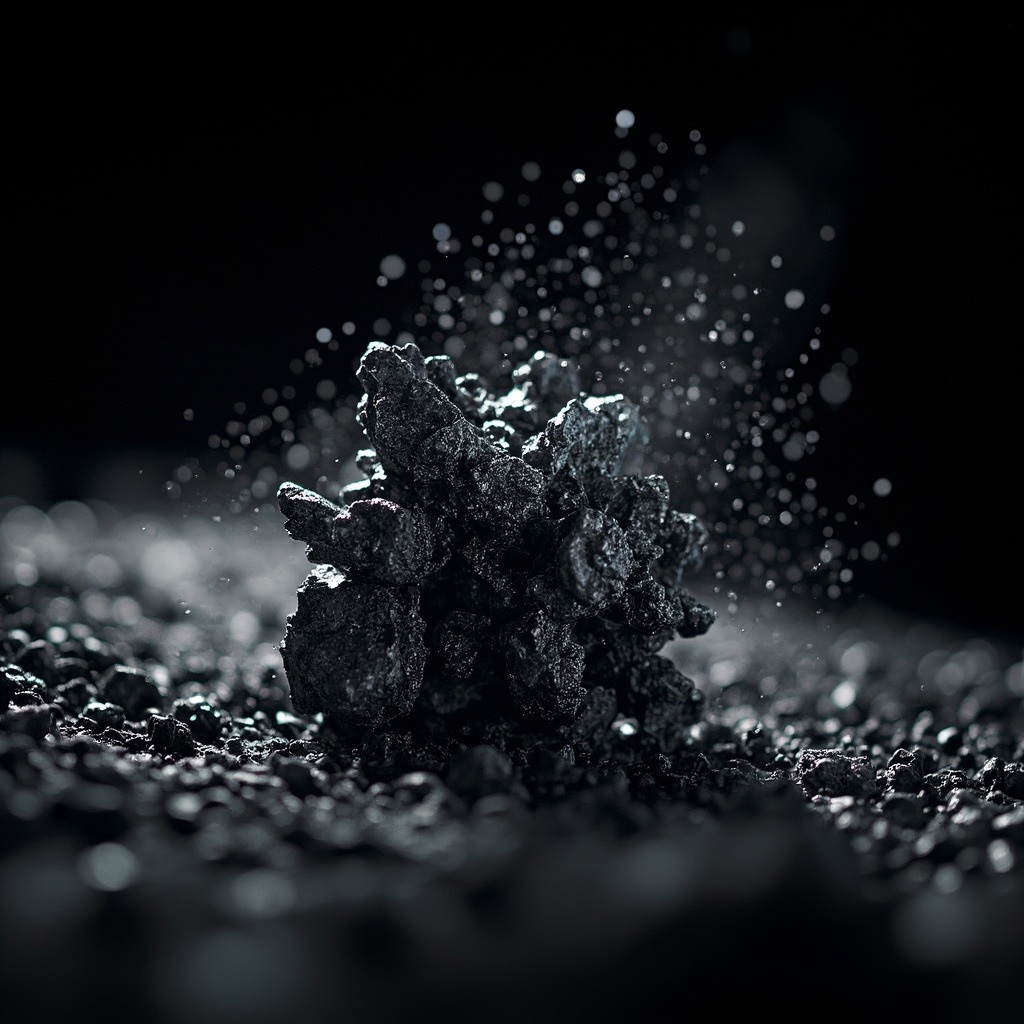 There is a quiet war happening inside your lithium-ion battery. It is not a war of chemicals or voltages. It is a war of geometry. The anode, that silent workhorse, demands perfection. And for years, the industry has been wrestling with a fundamental problem: how do you take a jagged, irregular flake of natural Spherical Graphite particle without destroying its soul? The answer is not magic. It is physics. Brutal, elegant, and highly profitable physics.
Let us be brutally honest here. The market is flooded with graphite that looks like broken glass under a microscope. Sharp edges, jagged protrusions, and a surface area that screams for unwanted side reactions. This is not battery-grade material. This is a liability. The difference between a flake that works and a flake that performs is the difference between a rock and a polished gemstone. And the polishing process, known as mechanical spheroidization, is where the real engineering begins.
The core principle is deceptively simple. You take a raw flake, you subject it to a controlled, high-energy mechanical environment, and you let the laws of impact, friction, and shear do the work. The sharp corners break off. The rough edges get rounded. The particle collapses inward, densifying into a near-perfect sphere. But here is the catch that separates the winners from the pretenders: it is not just about smashing things together. It is about controlling the force vector, the residence time, and the energy density with surgical precision. Too much force, and you create micro-fractures that kill the capacity. Too little, and you are just tumbling dust.
This is where our specific technology breaks the mold. We are not talking about generic ball mills or tired hammer crushers. We are talking about a proprietary multi-stage rotor-stator system that mimics the natural process of river stones smoothing over millennia, but compressed into seconds. The physics is beautiful. The flake enters the chamber, and immediately it is caught in a vortex of controlled collisions. The particles hit each other, not the machine. This is the secret. By optimizing the particle-to-particle interaction, we eliminate the contamination and structural damage that plagues traditional methods. The result is a spheroidized product with a tap density that makes competitors weep and a specific surface area that stays stubbornly low.
Think about what that means for your bottom line. A higher tap density means you can pack more active material into the same electrode volume. That is not just an incremental improvement. That is a step-change in energy density. And a low surface area means fewer parasitic reactions, longer cycle life, and a battery that does not swell up like a balloon after a few hundred cycles. This is not theory. This is the hard data coming out of our pilot plant, where we have consistently achieved sphericity values above 0.95 with yield rates that defy industry norms.
The market is screaming for this. The transition to electric vehicles is not a gentle slope. It is a cliff. And the supply chain for battery-grade graphite is the rope that everyone is clinging to. The old method of spheroidization was a necessary evil. High waste, high energy consumption, and inconsistent quality. It was a bottleneck. We have turned that bottleneck into a valve. A valve that can be tuned, controlled, and scaled.
Do not mistake this for a simple equipment upgrade. This is a rethinking of the physics itself. We have mapped the stress-strain curves of graphite flakes at the micron level. We have modeled the fracture mechanics to predict exactly where a flake will break and how it will reform. The machine does not just crush. It sculpts. And the final product is a graphite sphere that is not just round, but optimized for the electrochemical battlefield it is about to enter.
The flake is the past. The sphere is the future. And the physics of that transformation is no longer a mystery. It is a machine. It is a process. And it is ready for production. The question is not whether you can afford to adopt this technology. The question is whether you can afford to keep using the old one. The battery market does not reward good enough. It rewards the best. And the best graphite is spherical.